7 places · Naples
Royal Naples: The Best Palaces & Castles in Naples
For six centuries Naples was a royal capital, ruled by Angevin and Aragonese kings, Spanish viceroys and the Bourbons, and their palaces and fortresses still frame the waterfront. The Royal Palace, Teatro di San Carlo, Galleria Umberto I and Castel Nuovo stand within a ten-minute walk of Piazza del Plebiscito, while Castel dell’Ovo sits on its islet off the seafront. Castel Sant’Elmo crowns the Vomero hill above them all and is best reached by funicular.
Compare at a glance
| Place | Area |
|---|---|
| Royal Palace of Naples (Palazzo Reale) | Porto & Municipio |
| Piazza del Plebiscito | Porto & Municipio |
| Galleria Umberto I | Toledo & Quartieri Spagnoli |
| Teatro di San Carlo | Porto & Municipio |
| Castel Nuovo (Maschio Angioino) | Porto & Municipio |
| Castel dell'Ovo | Chiaia & Lungomare |
| Castel Sant'Elmo | Vomero |
-
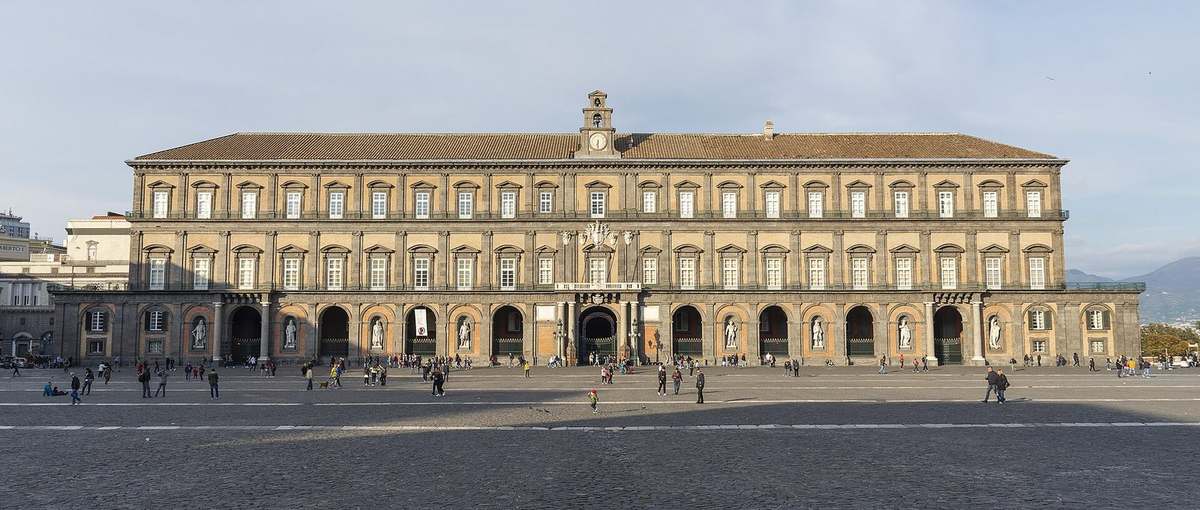
The Royal Palace facade on Piazza del Plebiscito Photo: Sordelli, Wikimedia Commons (CC BY-SA 3.0) 1 Royal Palace of Naples (Palazzo Reale)
Porto & Municipio
Domenico Fontana designed the Royal Palace for the Spanish viceroy Fernando Ruiz de Castro, Count of Lemos, and the first stone was laid in 1600. Read the full guide to Royal Palace of Naples (Palazzo Reale) →
-
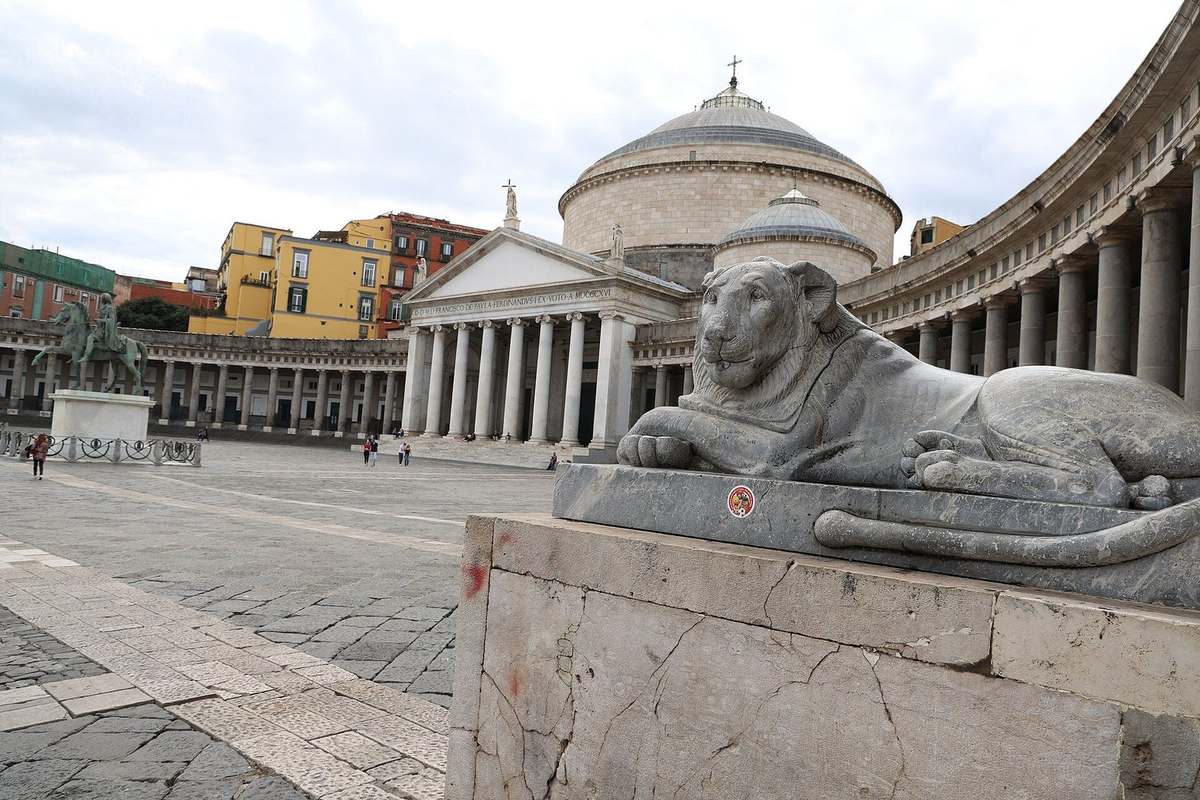
Piazza del Plebiscito and San Francesco di Paola Photo: Lucia Montanaro, Wikimedia Commons (CC BY-SA 4.0) 2 Piazza del Plebiscito
Porto & Municipio
Piazza del Plebiscito is the city’s grand public square, about 25,000 square meters paved in Vesuvian stone between the Royal Palace and the church of San Francesco di Paola. Read the full guide to Piazza del Plebiscito →
-
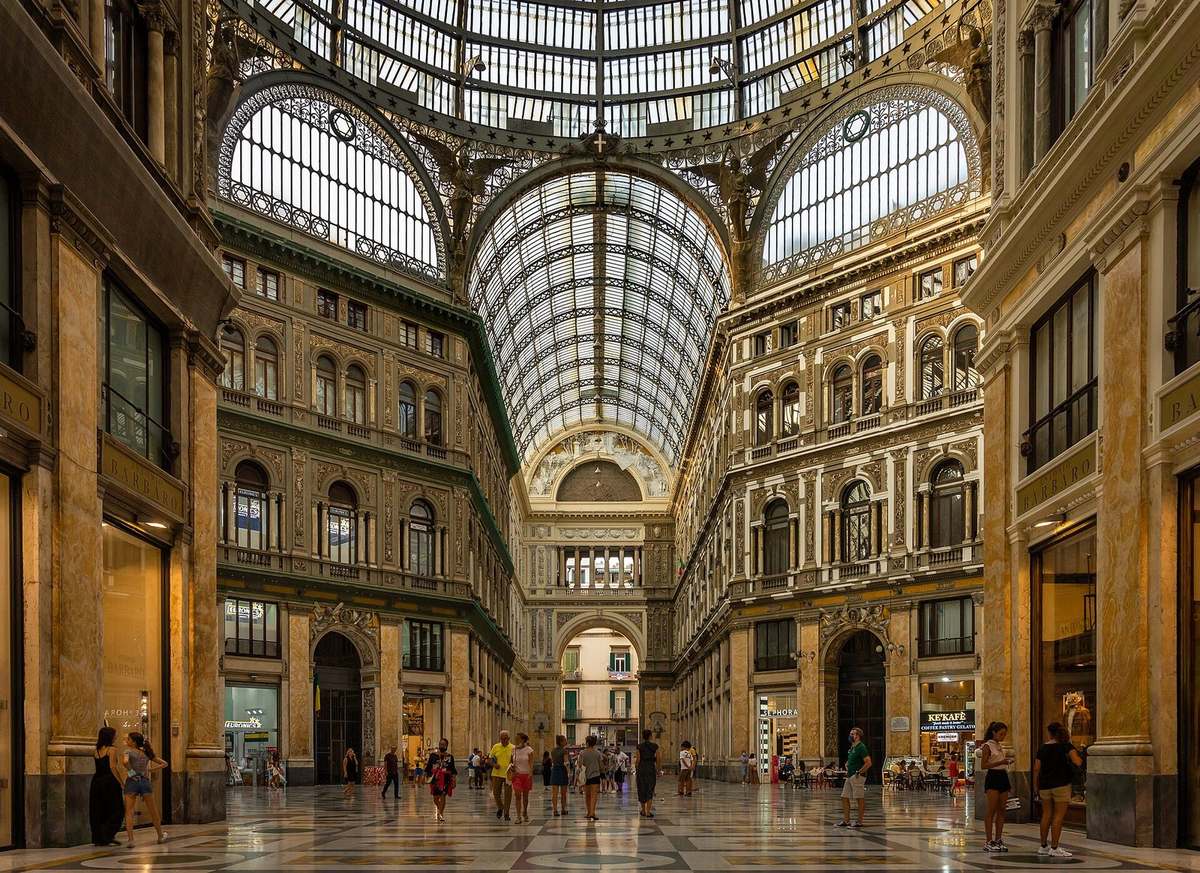
Under the glass dome of Galleria Umberto I Photo: Marco Ober, Wikimedia Commons (CC BY-SA 4.0) 3 Galleria Umberto I
Toledo & Quartieri Spagnoli
Galleria Umberto I is a covered shopping arcade built between 1887 and 1890 to a design by Emanuele Rocco, part of the rebuilding of Naples known as the Risanamento. Read the full guide to Galleria Umberto I →
-
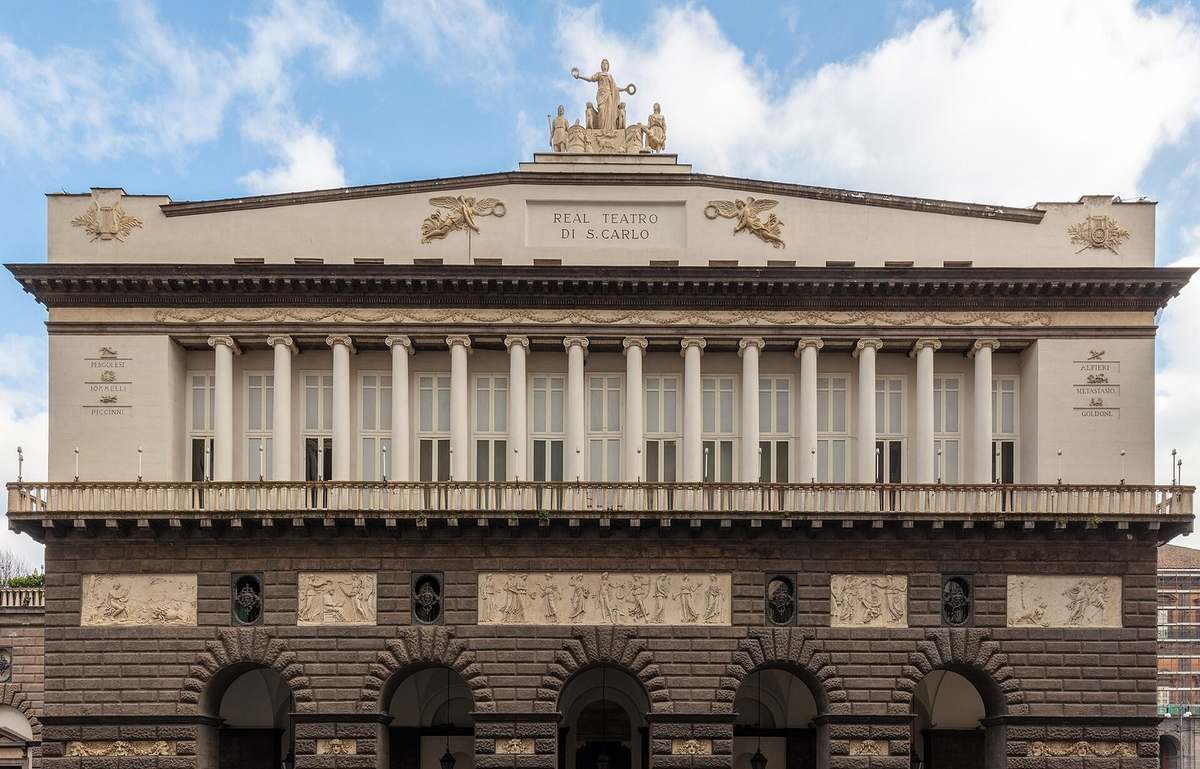
The facade of Teatro di San Carlo on Via San Carlo Photo: Diego Delso, Wikimedia Commons (CC BY-SA 4.0) 4 Teatro di San Carlo
Porto & Municipio
Teatro di San Carlo opened on November 4, 1737, built for King Charles of Bourbon to designs by Giovanni Antonio Medrano, and it is often called the oldest continuously active opera house in the world, decades older than La Scala or La Fenice. Read the full guide to Teatro di San Carlo →
-
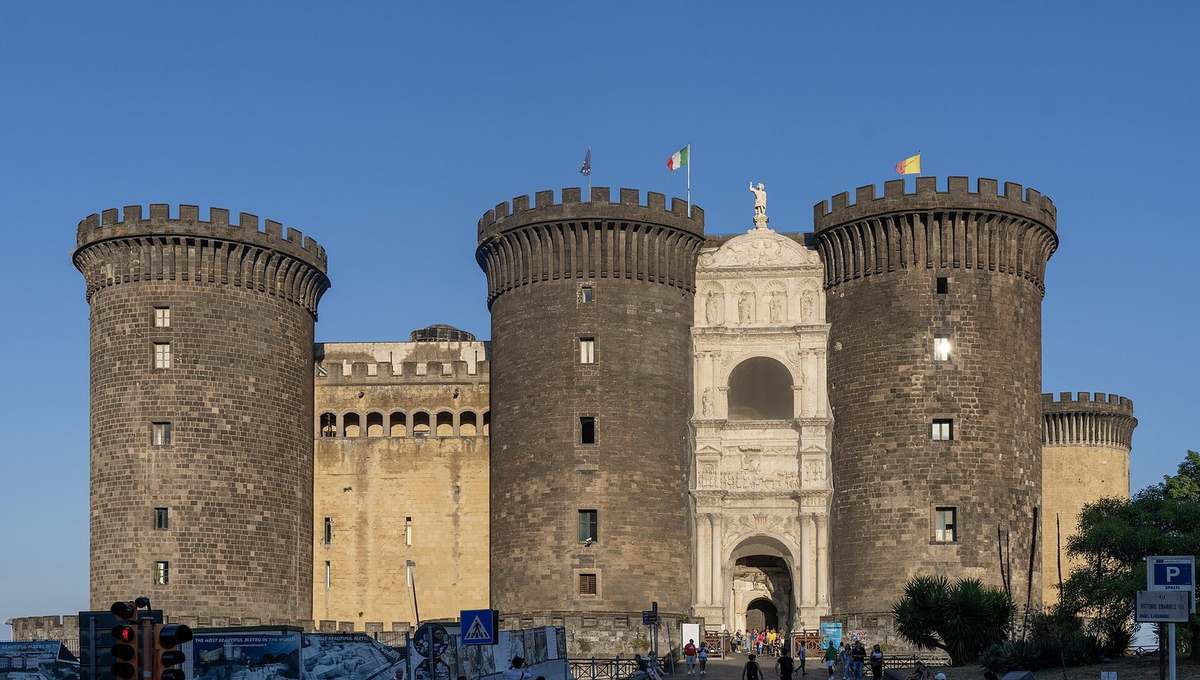
Castel Nuovo and its triumphal arch on Piazza Municipio Photo: PaestumPaestum, Wikimedia Commons (CC BY-SA 4.0) 5 Castel Nuovo (Maschio Angioino)
Porto & Municipio
Castel Nuovo was built from 1279 to 1282 for Charles I of Anjou, then largely rebuilt in its present form after Alfonso V of Aragon took Naples in 1443, with Catalan architect Guillem Sagrera leading the work from 1453. Read the full guide to Castel Nuovo (Maschio Angioino) →
-
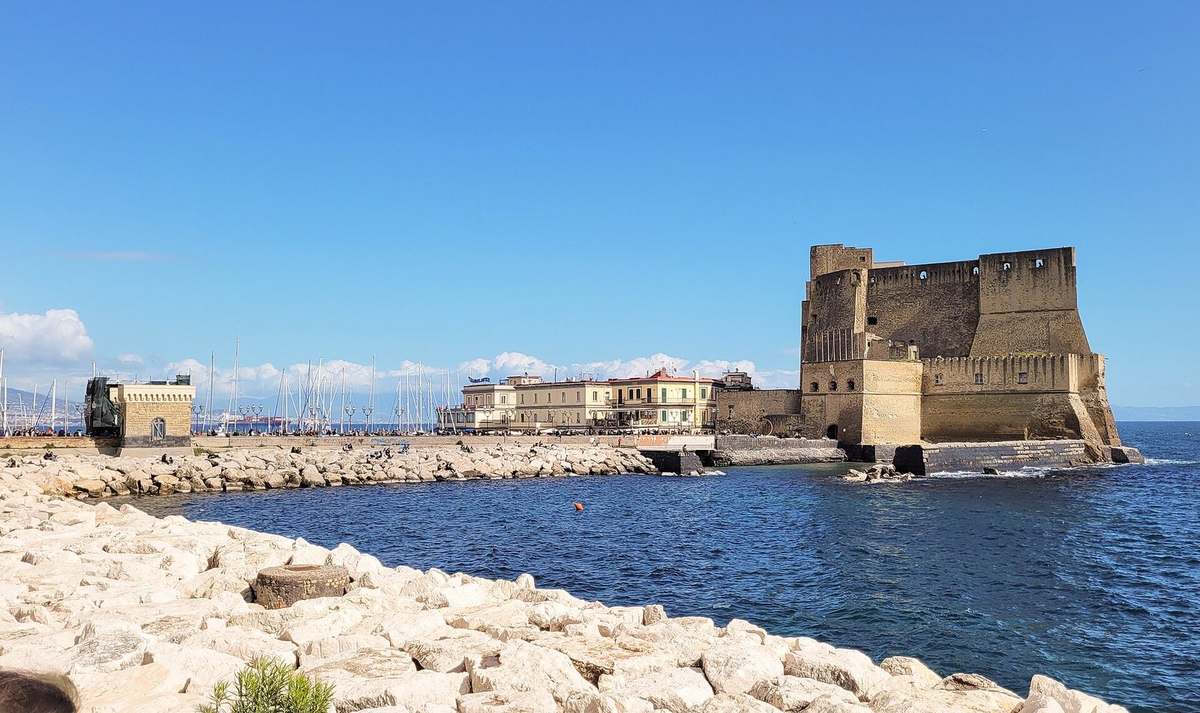
Castel dell’Ovo on the Naples seafront Photo: Bernard Gagnon, Wikimedia Commons (CC BY 4.0) 6 Castel dell'Ovo
Chiaia & Lungomare — Borgo Marinari
Castel dell’Ovo stands on the former islet of Megaride, joined to the shore by a causeway of a little more than 100 meters. Read the full guide to Castel dell'Ovo →
-
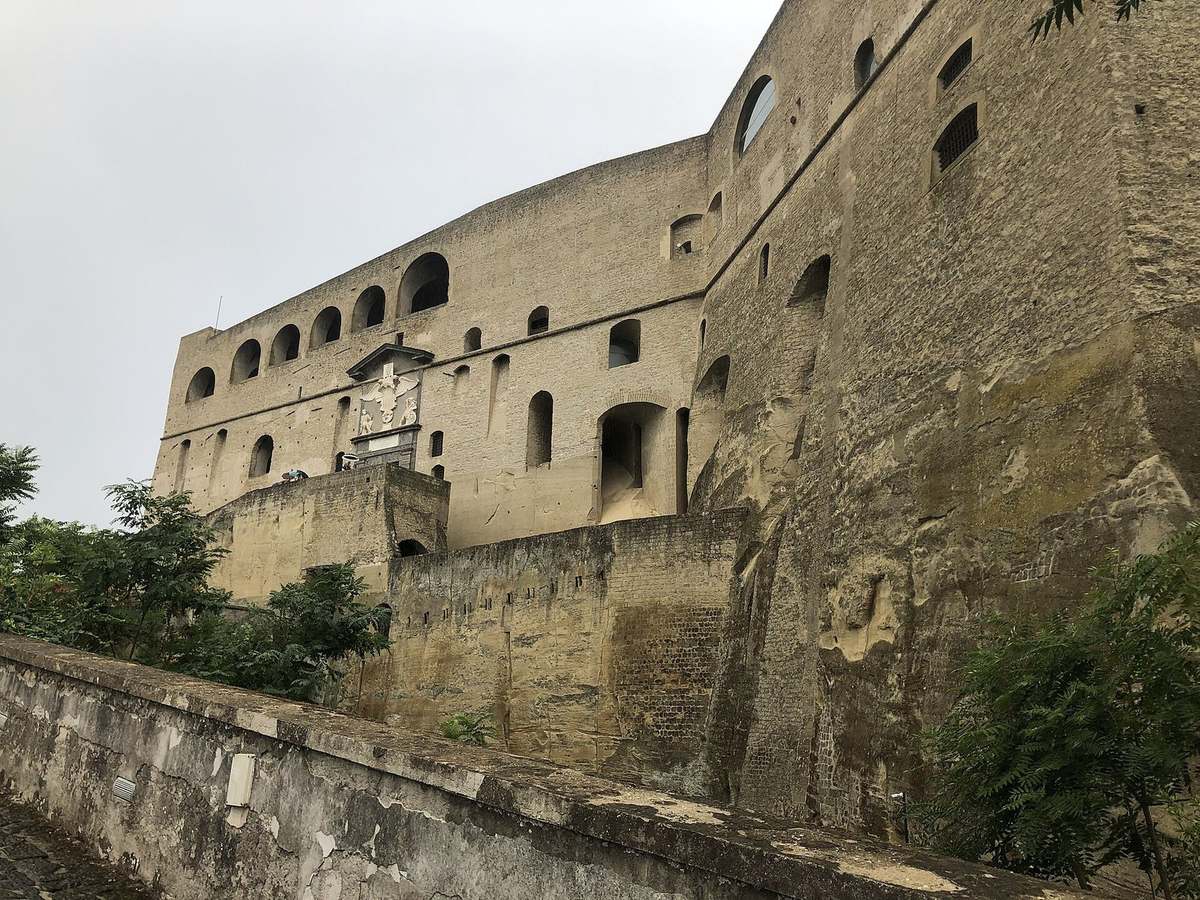
The ramparts of Castel Sant’Elmo on the Vomero hill Photo: Ilardite, Wikimedia Commons (CC BY-SA 4.0) 7 Castel Sant'Elmo
Vomero
Castel Sant’Elmo crowns the Vomero hill next to the Certosa di San Martino. Read the full guide to Castel Sant'Elmo →


